Placement decides half the outcome
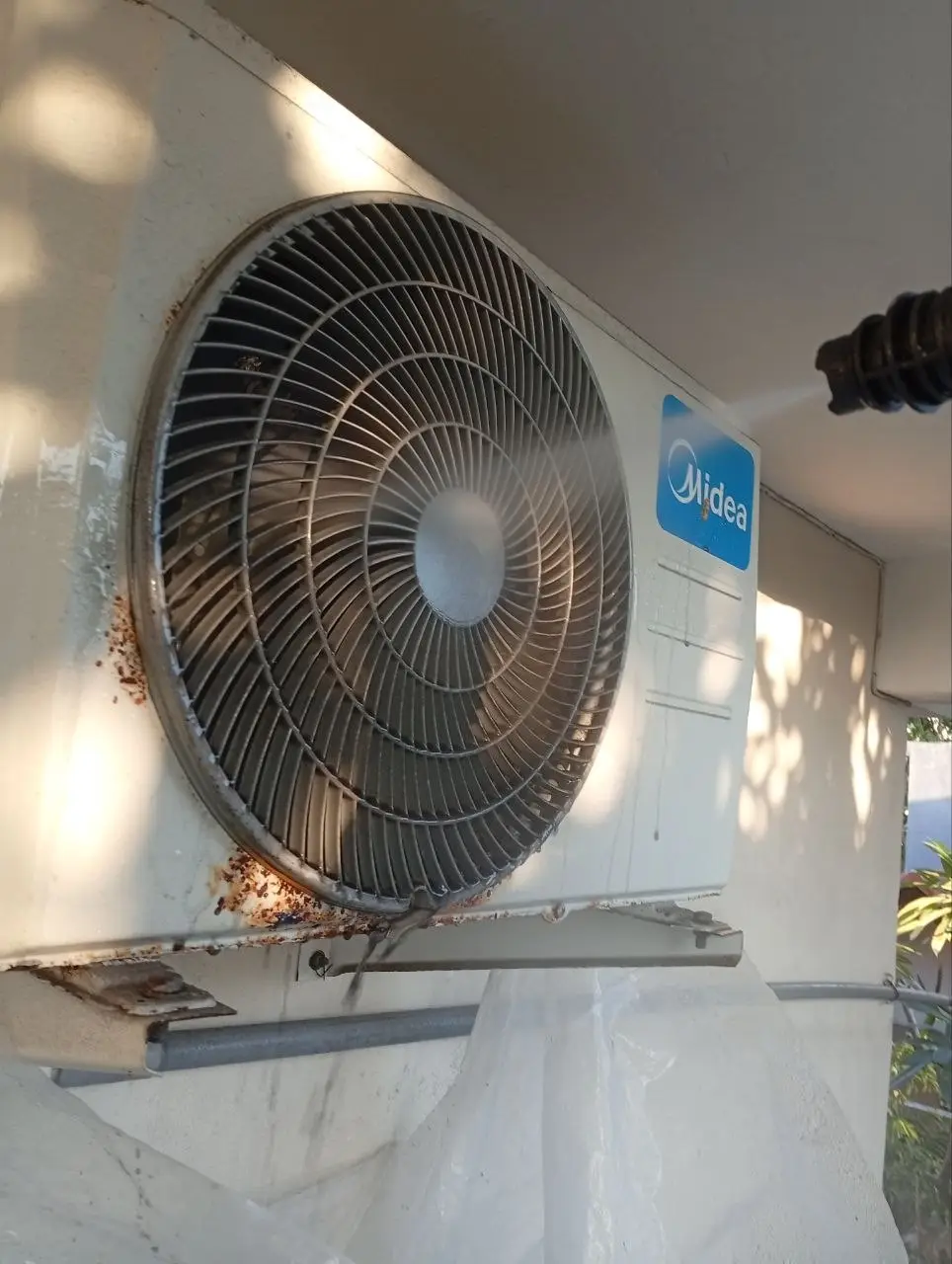
Indoors, the unit needs a spot where air can travel the room without blowing straight onto a bed or desk, on a wall that can carry it, away from heat sources. Outdoors matters more: the condenser needs shade if possible, clear airflow on all sides, and a position it can actually be serviced in — a unit walled into a decorative niche re-breathes its own hot air and runs hot for its whole life.
Distance counts too. Every extra metre of pipe run costs cooling capacity and money (extra piping is Rp150K per metre), so a layout that keeps the indoor and outdoor units close is cheaper twice.
The vacuum pump is not optional
Before refrigerant is released into the pipes, the lines must be evacuated with a vacuum pump to pull out air and, above all, moisture. In Bali’s humidity there is always moisture. Skip the vacuum — the classic shortcut of a cheap install — and that moisture circulates with the refrigerant, forms acid with the compressor oil, and quietly eats the compressor from inside.
The visible difference is a technician who connects a pump and gauges and waits, versus one who simply opens the valves and lets refrigerant purge the line. If you watch one thing on installation day, watch for the vacuum pump.
Piping, insulation and the flare joints
The details that decide whether the system still holds gas in three years:
- Copper pipe bent cleanly, not kinked — a kink chokes refrigerant flow permanently.
- Both pipes insulated along the full run; bare pipe sweats in Bali humidity and drips into the wall.
- Flare joints cut and torqued properly — badly made flares are the most common slow-leak point.
- Pipe runs within the length the unit is rated for, with the correct oil traps on long vertical runs.
Drainage is where cheap installs show up first
Every indoor unit produces litres of condensate a day in this climate, and it all leaves through one small drain line. That line needs a continuous downhill slope and a proper outlet — not a loop, not a flat run over the ceiling, not an end tucked behind the outdoor unit. Water on the floor weeks after a new install is almost always a drainage fault, not a product fault.
Commissioning: the test run that proves the job
A finished install ends with a test run, not with packing tools: checking the running pressure and temperatures, confirming the condensate actually drains, and leaving the remote configured sensibly. Our installation labour is Rp450K for 0.5–1 PK and Rp600K for 1.5–2 PK, materials measured and confirmed before work — and the installation carries a 12-month warranty, which is only possible because the steps above are not skipped.
Moving or removing a unit
Relocation is a full job in miniature — recover the refrigerant, remake the flares, re-vacuum at the new position — which is why it is priced as one (Rp600K for 0.5–1 PK, Rp750K for 1.5–2 PK). A bare removal is Rp175K. If a unit is being moved to a new home or villa, the same installation rules above apply at the new wall.