Freon does not get "used up"
Refrigerant moves heat by circulating between the indoor and outdoor units in a closed circuit. It is not consumed in the process — a well-installed split AC can run for many years without ever needing gas. So if a technician tells you every unit needs an annual top-up, that is a business model, not physics.
When a unit genuinely is low, the refrigerant escaped somewhere: a flare joint that was never tightened properly, a corroded pipe near the coast, a pinhole in the coil. The leak is the actual problem; the missing gas is just the symptom.
The signs of low refrigerant
Low refrigerant looks different from a dirty unit, though both end in a warm room:
- The air from the indoor unit blows steadily but is barely cool.
- Ice forms on the small copper pipe or on the evaporator coil itself.
- The room takes far longer to cool than it used to, or never reaches the set temperature.
- A faint hissing at a joint, or oil stains around pipe connections — refrigerant leaks carry a little compressor oil with them.
What a proper freon service looks like
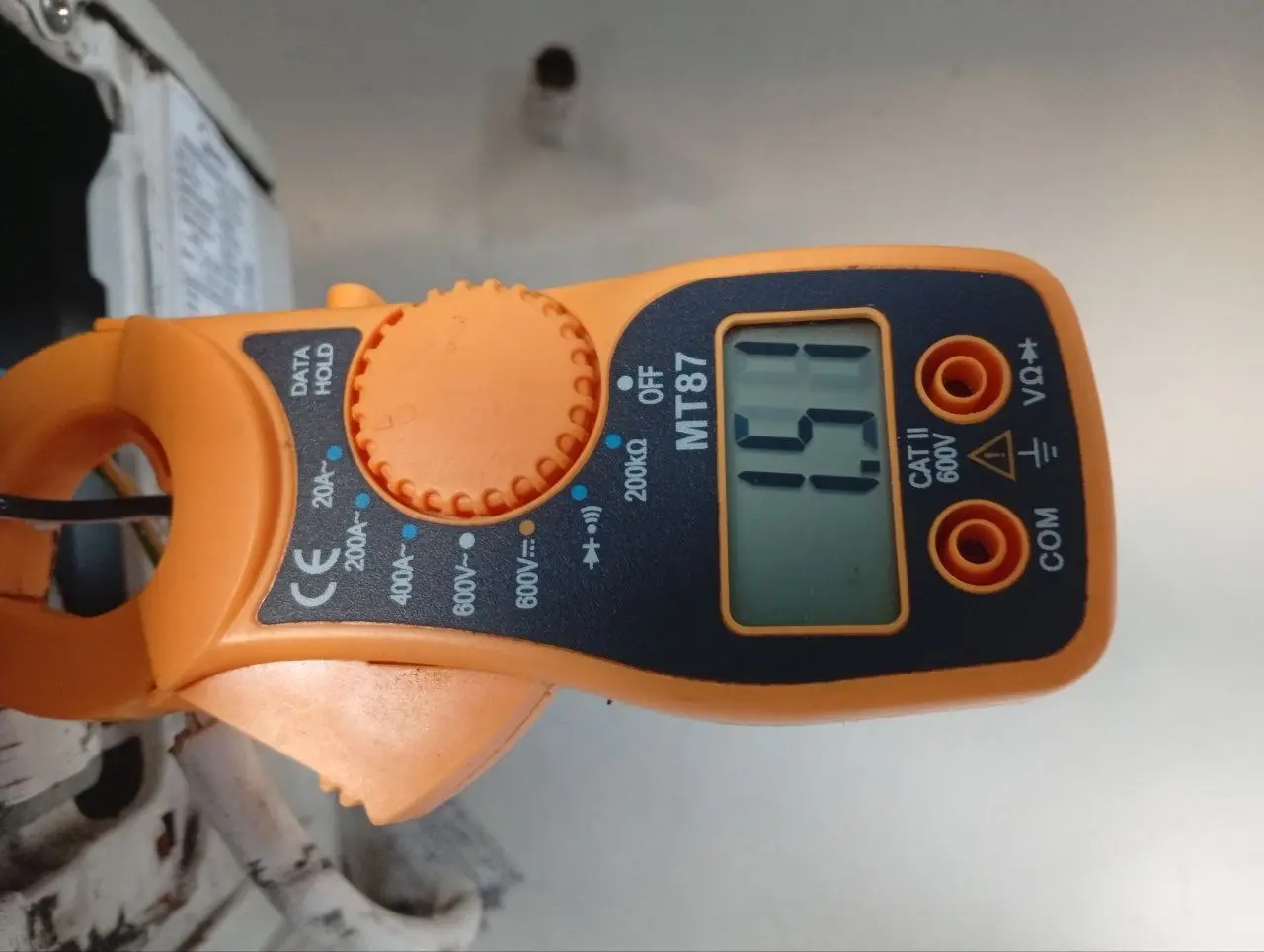
We start by checking the refrigerant type and the system pressure, and looking for evidence of a leak — that check is what separates a real freon job from a guess. The price is set by capacity and by whether the system needs a top-up or a full refill: a top-up is Rp325K–Rp450K by PK, and a full refill Rp350K–Rp550K.
Matching the refrigerant type matters. R32, R410A and R22 systems run at different pressures and must not be mixed — a unit is refilled with what it was built for, which is printed on the outdoor unit nameplate.
Fix the leak, or the refill is rent
Gas escapes through the same hole it escaped through last time. Topping up a leaking system buys weeks or months of cooling, after which you pay again — and in the meantime the compressor has been running on low charge, which is how refrigerant problems turn into compressor problems.
If the pressure test points to a leak, we quote the repair before anything is refilled, and repairs carry a 30-day labour warranty plus 3 months on parts. Sometimes the honest answer is that a leak sits somewhere expensive to reach, and a scheduled top-up is the pragmatic choice — but that should be a decision you make knowingly, not a surprise every few months.
If your unit still runs on R22
R22 is an older refrigerant being phased out under the Montreal Protocol, and Indonesia has restricted it for years — new equipment no longer uses it and servicing supplies keep shrinking, so R22 work gets steadily more expensive and harder to source. An R22 unit that develops a serious leak or a compressor fault is usually not worth refilling; the money does more in a new R32 unit, which also cools on far less electricity.